Show only:
Classics only
Sort by:
CCEL Search results

Institutes of the Christian Religion by Calvin, John (1509-1564)
... in substance. Proofs from Hilary, Jerome, Augustine, in their use of the words Essence ... those names which denote distinctions” says Augustine “is meant the relation which they ... be necessary to observe how carefully Augustine, to whom all these miscreants are ...
Institutes of the Christian Religion by Calvin, John (1509-1564)
... respect. For (to use the words of Augustine) “if Christian discipline condemned all wars, ... burn with implacable severity; they must, as Augustine says (De Civit. Dei. Lib.…
Institutes of the Christian Religion by Calvin, John (1509-1564)
... and divine righteousness. Most truly does Augustine say in one place, that the ... of heaven! Nor is the argument of Augustine less forcible:…
Institutes of the Christian Religion by Calvin, John (1509-1564)
... now give to our opponents the answer which Augustine then gave to the Donatists (in Joan. Tract ...

Cassian, John (360-435)
... that moment by the genius of St. Augustine. But the discrepancy between the ideas of ... St. Augustine and the theological system of the Eastern ... so far from the views of St. Augustine as to embrace those of Pelagius. On the ...

Sovereignty of God by Pink, Arthur Walkington (1886-1952)
... addressed by many prominent figures such as St. Augustine, St. Aquinas, Calvin, and Jonathan Edwards. Pink studied ...
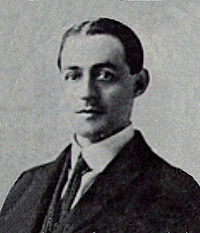
Pink, Arthur Walkington (1886-1952)
Evangelist and Biblical scholar
Commentary on the Whole Bible Volume V (Matthew to John) by Henry, Matthew (1662-1714)
... in darkness; and the darkness comprehended it not. Augustine says (de Civitate Dei, lib. 10, cap. 29 ...
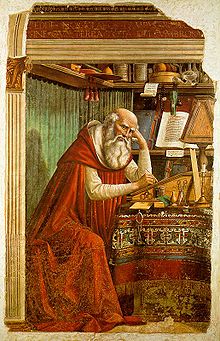
Jerome, St. (c. 345-420)
... is of great interest, particularly that with Saint Augustine. His greatest gifts were in scholarship, and he ...
Handbook on Faith, Hope, and Love by Augustine, Saint (354-430)
... true God. This basic motif appears everywhere in Augustine's thought as the very foundation of his ... obviously a part of the Neoplatonic heritage which Augustine appropriated for his Christian philosophy. The good is ...
